
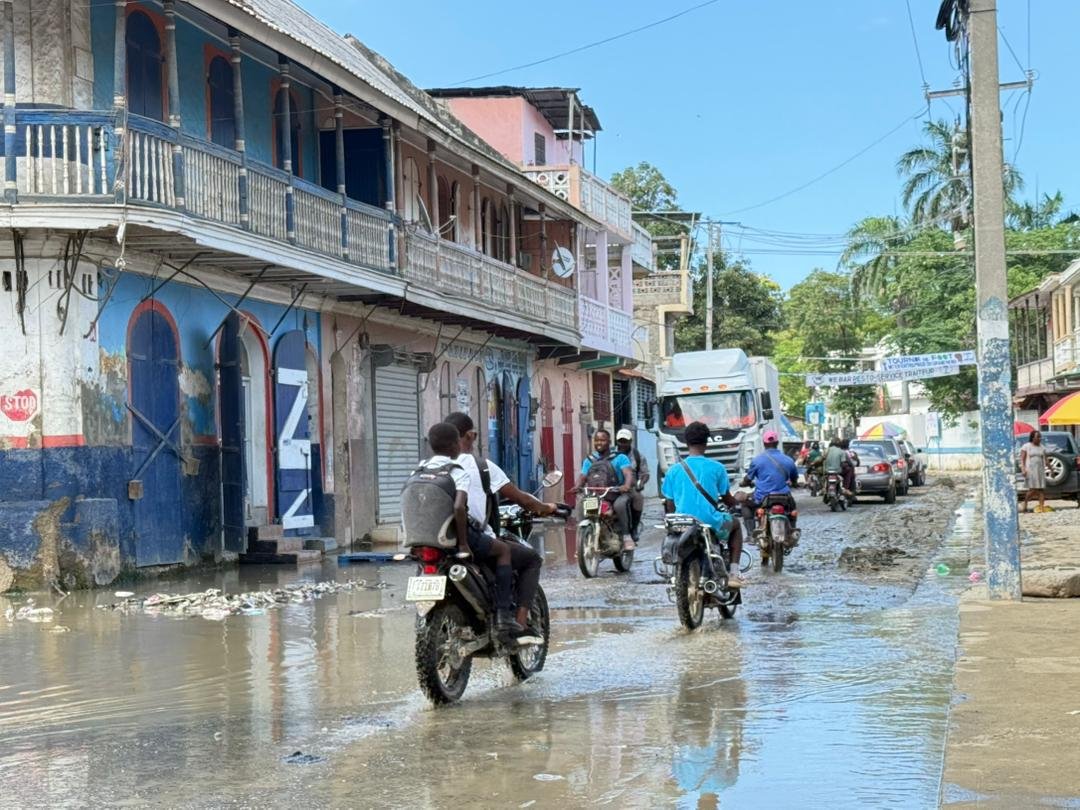
Cap-Haïtien is facing a significant deterioration in sanitary conditions amid continuous rainfall and poor waste management. For several days, nearly constant rain has affected the city and surrounding areas, worsening an already fragile situation caused by garbage accumulation and blocked drainage systems.
Neighborhoods such as Blue Hills, Bas-Vertières, Bas-Champen, Cité Chauvel, Cité du Peuple, Dos Aviation, and Petite-Anse are heavily impacted, with stagnant water flooding homes. Streets have turned into open-air canals, highlighting the failure of the drainage infrastructure.
Ravines, canals, and sewers—poorly maintained—overflow even after minor rainfall. This structural issue remains unresolved, fueling frustration among residents. In Plaine-du-Nord, particularly between Carrefour Bois Caïman and Carrefour Moustique, runoff water is flooding the national road due to clogged canals.
Residents are demanding concrete action, as temporary solutions are no longer sufficient. The urgency for sustainable sanitation is increasing as the rainy season begins.
Authorities have intensified efforts, building on local initiatives such as the “konbit netwayaj” launched in 2025. In this context, the Haitian government officially launched the “Haiti Konbit Zero Waste” program on April 25, 2026, in Cap-Haïtien.
Led by the SNGRS in collaboration with the Ministry of Environment, MTPTC, and the local government, the initiative aims to combat unsanitary conditions and promote civic responsibility.
Cleanup operations have already started, particularly along the coastal road linking the airport to the city center.
Officials emphasized key priorities such as waste management, reforestation, and environmental protection, calling for collective mobilization.
Supported by Prime Minister Alix Didier Fils-Aimé, the program aims to establish a new environmental culture in Haiti through concrete actions and active citizen participation.