
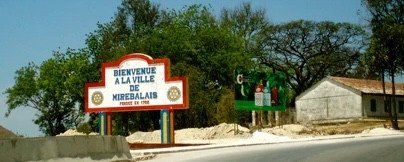
On March 31, 2025, the beating heart of Haiti’s Central Plateau fell silent under the deafening bursts of assault rifles. Today, March 31, 2026, marks exactly 365 days since the sons and daughters of Mirebalais have wandered like fallen shadows in their own country, driven from their homes by the brutal terror of gangs. Between the silence of Port-au-Prince and the internal quarrels of a local elite disconnected from the suffering of its people, the city that hosts the Hôpital Universitaire de Mirebalais, the largest hospital center in the country, has become the graveyard of a population’s hopes—sacrificed on the altar of organized impotence.
A year ago, Mirebalais was not just a city on the map. It was a crossroads of life, a welcoming land, and a vital economic hub for the entire lower Central Plateau region. Today, it is nothing more than a scarred territory, a forbidden zone where the right to life and death belongs to warlords who speak only the language of bullets and devastation.
The reality is heartbreaking. Entire families, who built their lives over generations through hard work, now find themselves scattered across places like Hinche and Lascahobas, or crammed into unsanitary makeshift shelters elsewhere. Becoming a refugee within one’s own department and country is an unbearable insult to human dignity. Behind every displaced person lies a looted home or business, an abandoned harvest, and the haunting memory of a loved one killed by gunfire or a woman violated by barbarity. Internal exile is a wound that does not heal—an endless wandering under the burning sun of indifference.
The moral collapse of local elites
The most tragic aspect of this descent into hell is not only the firepower of the invaders, but the carefully maintained impotence of those who claim to lead the city. To the Mirebalais elite—intellectuals, politicians, and notable figures—the question must be asked bluntly: how many more bodies will it take for your personal ambitions and petty calculations to give way to the imperative of collective survival?
While the population drinks the bitter cup of humiliation and hunger, leading local political figures remain trapped in sterile divisions, incapable of forming the united front necessary to reclaim the city. This disunity is a gift to the gangs, who thrive in such voids.
Every minute lost in petty rivalries over who will govern tomorrow’s ruins is another minute granted to the city’s executioners. History will remember, with unforgiving severity, that in the face of absolute urgency, you chose to tend to your egos rather than rescue your brothers lying in the dust.
Complicit abandonment by the central government?
What can be said about the central authorities, settled in their air-conditioned offices in Port-au-Prince? Focused on power games and empty political intrigues, the government seems to have effectively erased Mirebalais from the national map. This state indifference is not mere negligence—it amounts to abandonment by omission.
One cannot claim to govern a country or demand sovereignty while allowing one of its most strategic cities to slowly die in full view of the world. Messages of sympathy and promises to restore order are no longer enough to calm the anger of those sleeping on concrete floors.
What is needed now is large-scale action: a full recovery of the territory and real security that allows farmers to return to their land and merchants to reopen their businesses without fearing for their lives. Authority is not asserted in salons—it is proven through the effective protection of territory.
The urgency of a collective awakening
On this painful March 31 for the people of Mirebalais, the time for soft rhetoric and distant electoral promises has passed. The legitimacy of those in power is measured solely by their ability to protect even the most vulnerable citizen from the fury of gangs. Without a liberated Mirebalais, cleared of armed groups, your authority is nothing more than a hollow fiction and a betrayal of the nation.
To the city’s notable figures: wake up. The land of your ancestors is slipping through your fingers while you argue over protocol. Unite your influence, your networks, and your resources to demand and actively support the city’s liberation. Silence and inaction make you silent accomplices to this occupation.
Mirebalais cannot and will not endure another year of this agony. The legendary resilience of its people has reached its breaking point, and patience has given way to a despair that could soon turn into uncontrollable fury. It is time to break the chains of fear and division so that the population can reclaim its land.
The dignity of an entire region is at stake in the deserted streets of Mirebalais. The tears of the displaced cry out for justice, and their gaze demands accountability from those who have failed in their duty. It is time for conscience to return, so that this city—once a shared pride—can regain its freedom. Let March 31, 2026 be the last day of our collective shame.