
In a historic joint initiative, Benin and Haiti officially submitted, on Tuesday, March 17, 2026, a nomination file seeking to inscribe the arts and social practices of Vodou on UNESCO’s prestigious Representative List of the Intangible Cultural Heritage of Humanity. This marks a major step toward the recognition of a heritage that has long been misunderstood and stigmatized.
Haiti and Benin have reached a decisive milestone by submitting the nomination titled “The Living Arts and Social Practices of Vodou in Benin and Haiti.” This binational initiative aims to highlight a shared cultural heritage, originating from the coasts of the Gulf of Benin and reimagined in the Caribbean following the transatlantic slave trade.
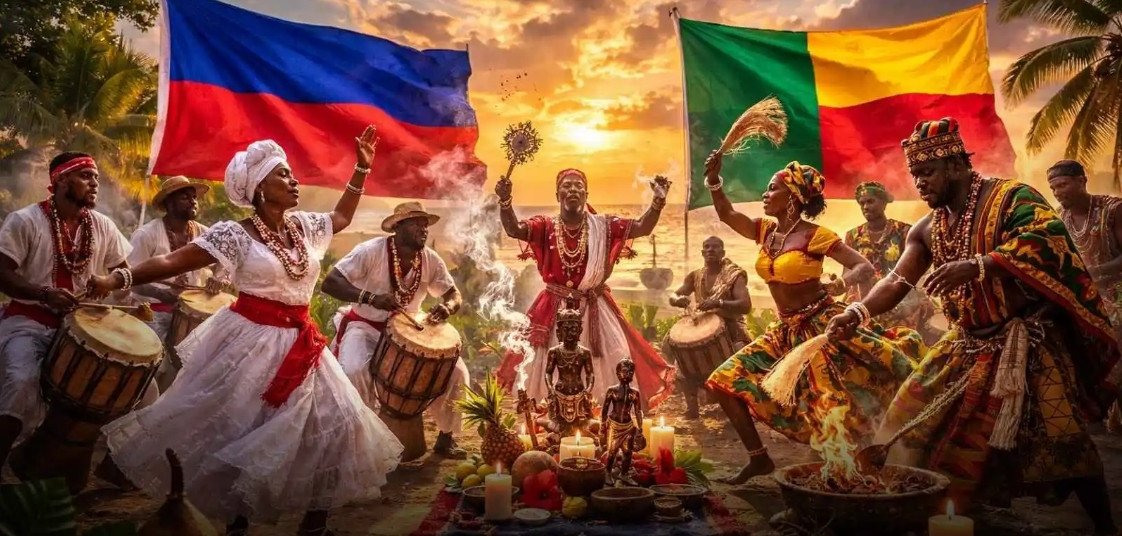
Far from stereotypes and reductive portrayals, the nomination presented by Beninese and Haitian experts emphasizes the deeply human, social, and artistic dimensions of Vodou. It underscores its fundamental role as a vehicle for social cohesion, intergenerational transmission, and cultural resilience for the communities that practice it. The richness of its artistic expressions—music, dance, singing, and visual arts—is also highlighted as an essential component of this living heritage.
In a statement obtained by our newsroom, Haiti’s National Bureau of Ethnology (BNE) praised the extensive work carried out by two cultural heritage experts, Haitian Ricarson Dorcé and Beninese Paul Akogni, who played key roles in drafting and compiling the dossier. Their work helped document, with precision, the diversity and vitality of these practices, from ritual ceremonies to the contemporary artistic expressions they inspire.
“To successfully carry out this ambitious project, institutions implemented an inclusive and participatory approach, fully aligned with the requirements of the 2003 UNESCO Convention for the Safeguarding of the Intangible Cultural Heritage,” explained Dr. Louis Marie Saintil of Haiti’s Delegation to UNESCO.
The BNE mobilized its technical teams to produce a documentary showcasing the richness of Vodou arts. In particular, meticulous efforts were made, with the support of Haiti’s Permanent Delegation to UNESCO, to engage directly with Haitian Vodou communities. “The objective was to obtain their free, prior, and informed consent—an essential step ensuring that the initiative comes from those most directly concerned, the custodians of this tradition,” stated Erol Josué, Director of the National Bureau of Ethnology.
This submission goes far beyond a mere administrative process. It represents an act of historical justice and renewed pride.
“Through this joint initiative, Benin and Haiti are not only seeking to protect and promote a valuable heritage. They also aim to contribute to global intercultural dialogue and to the recognition of cultural diversity, offering the world a new perspective on this philosophy and way of life,” emphasized Dr. Maryse Cyprien of Haiti’s Delegation to UNESCO.
The file is now in the hands of UNESCO’s evaluation committee. The final decision on this highly anticipated inscription is expected to be announced during the Intergovernmental Committee session in 2027.
In the meantime, this submission already stands as a symbolic victory for all those working toward the recognition and transmission of Vodou’s artistic heritage.