

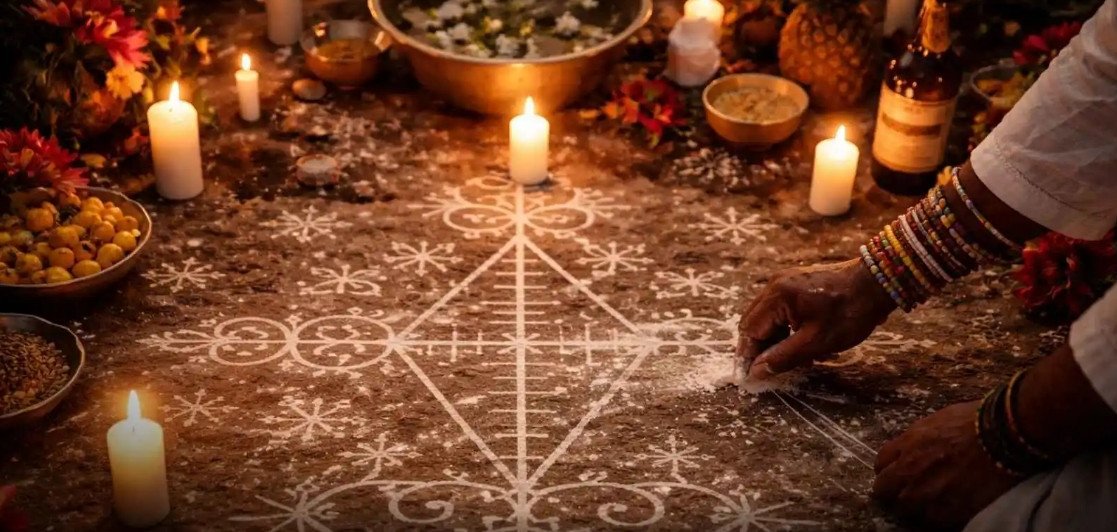
Haiti has taken an important step in promoting its cultural heritage by officially submitting the “know-how of vèvè tracing” to the UNESCO for inclusion on the Representative List of the Intangible Cultural Heritage of Humanity.
According to a statement from the Ministry of Culture and Communication, this initiative is part of a broader strategy to gain international recognition for an ancestral practice deeply rooted in Haitian history and identity.
Vèvè tracing, passed down from generation to generation, is a ritual graphic art rich in symbolism. It reflects the memory, spirituality, and creativity of the Haitian people.
The submission was carried out in collaboration with the Ministry of Foreign Affairs and Worship, Haiti’s Permanent Delegation to UNESCO, and the National Commission for Cooperation with UNESCO. Authorities consider this candidacy a major step in promoting Haiti’s intangible cultural heritage and strengthening the country’s cultural diplomacy.
Already listed in Haiti’s national inventory of intangible cultural heritage since 2019 and updated in 2025, vèvè tracing is now being presented internationally under the framework of the 2003 Convention for the Safeguarding of Intangible Cultural Heritage.
The government praised the work of researchers, practitioners, and communities involved in preparing the file. Minister of Culture Emmanuel Ménard reaffirmed the state’s commitment to preserving and promoting cultural expressions as a key pillar of national identity.