


In Port-au-Prince, the justice system has remained silent for over eight years regarding blood crimes, even as such acts continue to multiply across the territory. The bustling atmosphere at the entrance of the Port-au-Prince Court of First Instance masks a grim reality: justice here is blind, deaf, and disabled when it comes to judging the most serious crimes, while alleged murderers and rapists walk the streets and others wait indefinitely for their sentences.
For more than eight years, the jurisdictions of Port-au-Prince and Croix-des-Bouquets have been at a standstill regarding criminal assizes with jury assistance. This prolonged absence raises serious questions about the functioning of criminal justice in these two major jurisdictions where crime is at an all-time high.
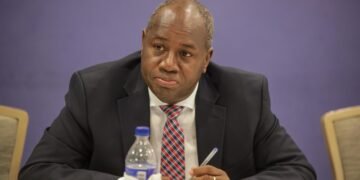
The Chief Judge (Doyen) of the Port-au-Prince Court of First Instance, who is struggling to keep the institution running, acknowledges the embarrassment. However, Judge Bernard Saint-Vil remains powerless. In a courthouse where one can hardly move without stepping on someone and where no suitable courtroom exists, the Chief Judge sees no light at the end of the tunnel. His face reflects both helplessness and distress; according to him, the proper conditions for holding criminal jury trials are still far—very far—away.
“The logistics for organizing criminal trials with a jury are heavy,” says the Chief Judge. Another major concern for him is the jurors themselves: “Is the justice system capable of ensuring their safety?”
To make matters worse, the court is currently located in Delmas, while technically the Mayor of Port-au-Prince must submit the list of jurors for review by the Government Commissioner and the Chief Judge.
Judge Bernard Saint-Vil wonders if, in the current context, the Mayor could even submit a list of individuals capable of serving as jurors, especially with so many internally displaced persons due to insecurity. Thousands of residents no longer have a fixed address. “I don’t know what the Ministry of Justice will do by then to help us in this regard,” he sighs.
The situation is no different at the Croix-des-Bouquets Court of First Instance. Chief Judge Grécia Norcéus had identified similar difficulties, made worse by the fact that Croix-des-Bouquets is controlled by criminal gangs. Assembling a jury from the local population is complicated. Judge Norcéus expressed deep regret that criminal jury trials have not taken place for eight years due to the precarious security situation.
“We tried to organize jury trials in 2023, but we could not gather the number of jurors required by law. The majority of people on the general list were forced to flee their homes because of armed gangs,” she explained.
Martin Ainé, president of the National Association of Haitian Court Clerks, reminds us how vital criminal assizes are for justice, as jurors represent society and defend it against crimes and rapes. The failure to hold these trials fuels a sense of impunity and weakens citizen trust in the judicial system.
These hearings, essential for processing the most serious crimes, are failing to materialize amidst structural constraints, repeated strikes, and persistent insecurity. Many cases remain in limbo, with defendants locked in an endless wait. Pretrial detention stretches on, justice retreats, and the sense of impunity continues to gain ground.