


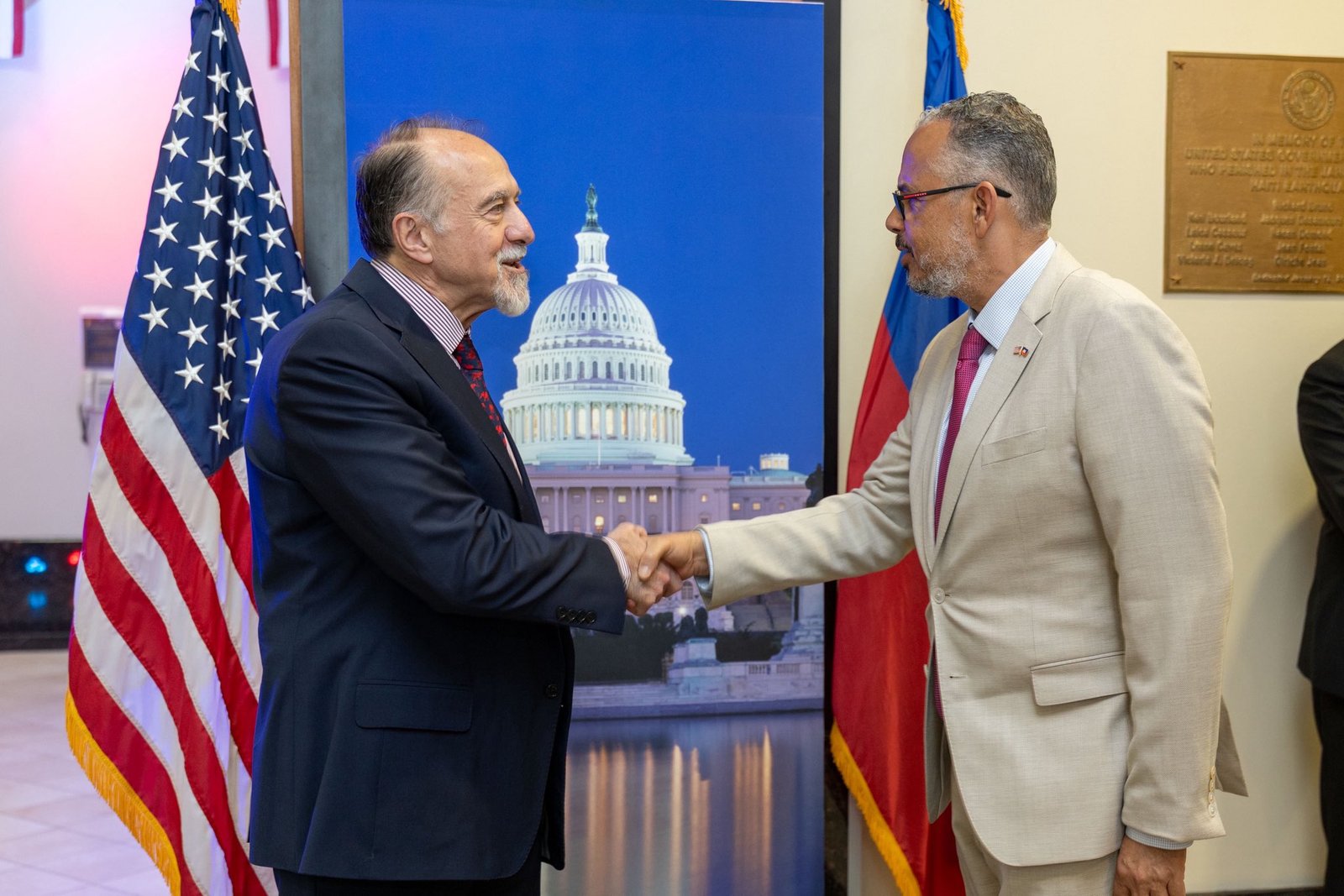
With the approach of February 7—a highly symbolic date in Haitian political life—the United States has moved to clarify its stance, reaffirming unwavering support for Prime Minister Alix Didier Fils-Aimé. This declaration comes amidst a climate of heightened political tension, dominated by debates surrounding the expiration of the Transitional Presidential Council’s (CPT) mandate. In a statement published Wednesday morning on the social media platform X, the U.S. diplomatic mission in Haiti expressed unambiguous backing for the head of government. “As the mandate of the Transitional Presidential Council comes to an end this coming Saturday, we support the leadership of Prime Minister Fils-Aimé in building a strong, prosperous, and free Haiti,” the official note stated.
Washington’s stance comes at a critical juncture, just as the political transition is being increasingly challenged by a significant segment of the population and the political class. February 7—traditionally associated with the transfer of power—is reigniting questions regarding the legitimacy of the current authorities and the path forward for the transition process. By reaffirming its support for the Prime Minister, the United States appears to be banking on continuity in governance, despite persistent criticism regarding the lack of concrete results, particularly in terms of security and the organization of credible elections. For some observers, this diplomatic signal bolsters Alix Didier Fils-Aimé’s position within a fragile institutional landscape dominated by uncertainty.
However, this declaration has not been universally welcomed. While some view it as a stabilizing factor in a context marked by chronic insecurity and instability, others decry it as yet another illustration of American influence in Haitian political affairs, coming at the expense of a genuinely Haitian-led solution to the crisis. As February 7 draws near, Washington’s open support for Prime Minister Alix Didier Fils-Aimé is reigniting the debate over the future of the transition, the role of the Transitional Presidential Council, and the current balance of power. In a country searching for direction and clear prospects, this international position will undoubtedly weigh heavily on the political dynamics of the coming days.