

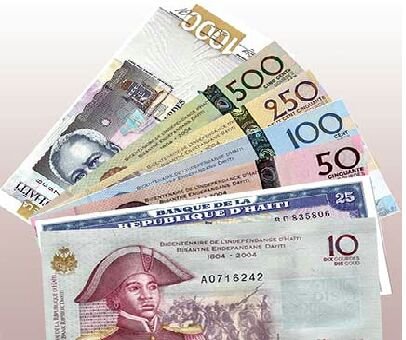
In a recent “Governor’s Note,” Ronald Gabriel, head of the Banque de la République d’Haïti (BRH), outlined why exchange rate stability is a central pillar in the fight against inflation in Haiti.
Exchange rate as a strategic anchor
Gabriel argues that in Haiti, the exchange rate functions almost like a public good. It is widely monitored and directly influences economic behavior, largely because the U.S. dollar serves as a de facto reference currency for many transactions.
As a result, sharp fluctuations in the exchange rate quickly spill over into:
- prices of goods and services
- business activity
- household purchasing power
The BRH’s objective, therefore, is not to fix the exchange rate rigidly, but to ensure gradual and non-disruptive movements that allow economic agents to adjust smoothly.
A legal and economic obligation
The governor emphasizes that exchange rate management is not optional. Under the 1979 law establishing the central bank, the BRH is mandated to:
- preserve the internal and external value of the national currency
- contribute to overall economic stability
Beyond the legal framework, the economic rationale is even more critical:
the exchange rate is one of the strongest predictors of inflation in Haiti.
In an import-dependent economy, depreciation of the gourde increases the cost of imported goods, which feeds directly into inflation. Even if the relationship is not strictly causal, the correlation is strong enough to make exchange rate stability a key policy lever.
The illusion of nominal gains
Gabriel also highlights a common misconception among households receiving remittances.
While a weaker gourde may increase the nominal value of transfers, it often reduces real purchasing power due to higher prices. This phenomenon, known as monetary illusion, means that exchange rate depreciation does not translate into real economic benefit for families.
Managing expectations and uncertainty
One of the most critical insights in the analysis concerns economic expectations.
If households and businesses anticipate depreciation:
- they may hoard dollars
- businesses may raise prices preemptively
This behavior can create a self-fulfilling inflationary spiral, driven not by fundamentals but by expectations—what macroeconomics refers to as “sunspot” dynamics.
Stabilizing the exchange rate, therefore, also serves to:
- reduce uncertainty
- anchor expectations
- prevent speculative behaviors
Policy tools and limitations
To achieve this stability, the BRH relies on several instruments:
- accumulation of international reserves
- sterilization of excess liquidity
- tighter regulation of foreign exchange transactions
- issuance of BRH bonds to discourage dollarization
However, the governor is clear:
exchange rate stability alone is not sufficient to control inflation.
Other factors also play a decisive role, including:
- global commodity prices
- fiscal policy sustainability
- political and institutional stability