
Some comparisons are uncomfortable. They challenge established narratives, clash with national sensitivities, and force us to confront realities we often prefer to avoid. Yet, they are sometimes necessary to understand why certain states, faced with extreme constraints, manage to recover, while others remain stuck in prolonged stagnation.
Comparing Haiti, Ethiopia, and Somalia is precisely such an exercise. At first glance, it may seem counterintuitive. In the collective imagination, these two African countries are still associated with war, famine, or institutional collapse. However, their recent trajectories tell a different story—one of states that, despite persistent fragilities, have initiated processes of economic and strategic transformation.
Ethiopia’s nominal GDP reached approximately $117 billion in 2025. Somalia, still marked by three decades of civil war, adopted in 2025 a “Vision 2060” explicitly aimed at achieving middle-income status. Haiti, on the other hand, remains on a path of prolonged contraction.
These contrasting experiences raise important questions.
1. Ethiopia: building a power
The Ethiopian case is perhaps the most striking example of transformation driven by political will. Emerging from the devastating Tigray conflict (2020–2022), with hundreds of thousands of deaths and reconstruction costs nearing $28 billion, the country could have fallen into lasting instability.
Instead, it has moved in the opposite direction.
The country is now projecting growth of 10.2% for the 2025–2026 fiscal year, surpassing earlier IMF forecasts. This sends a strong signal: Ethiopia aims to establish itself as an economy capable of rapid recovery—even after major conflict.
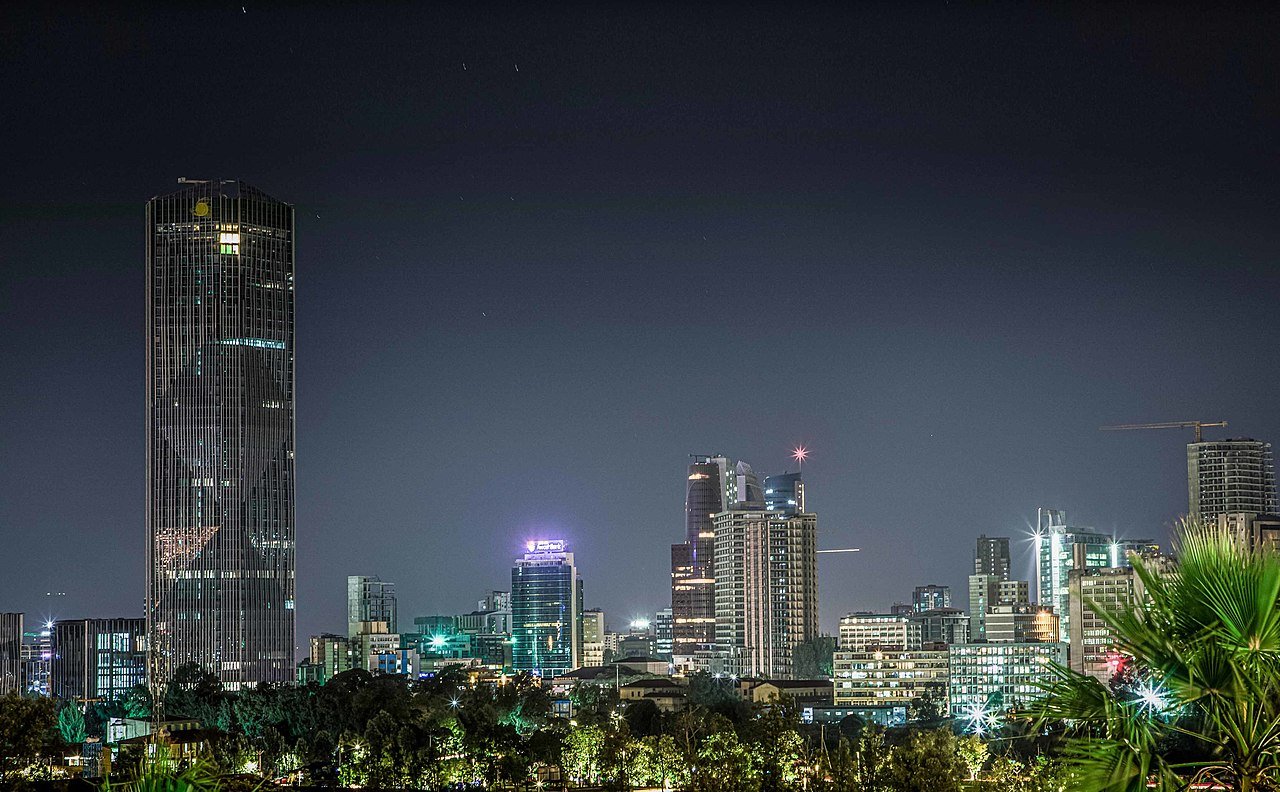
This is not merely a rebound effect. In the early 2000s, Ethiopia’s GDP was around $8 billion. Today, it exceeds $100 billion, making it one of Africa’s leading economies.
At the core of this rise is a clear bet: development driven by a national vision. The “Homegrown Economic Reform” program, launched in 2019, structures public action around key sectors such as agriculture, industry, digital technology, tourism, and investment attraction.
What truly distinguishes Ethiopia is its balance between openness and sovereignty. It attracts foreign capital without relinquishing strategic sectors, diversifies partnerships (China, Turkey, Gulf states, Western countries), and relies on a strong public apparatus, including a sovereign wealth structure.
This ambition is also reflected in major projects, such as the Bishoftu international airport (launched in January 2026), designed to handle up to 110 million passengers annually, positioning Ethiopia as a global air hub.
The objective: turn geography into economic power.
2. Somalia: resilience despite instability
Somalia’s case is even more counterintuitive. Long considered a failed state, it has endured decades of civil war and institutional collapse.
Yet, it has maintained relatively stable growth (3%–5%) over the past two decades.
This paradox is largely explained by the resilience of its private sector. In the absence of a strong state, businesses—especially in trade, telecommunications, and financial transfers—have sustained economic activity.
Today, Somalia seeks to transform this resilience into a structured development strategy. The launch of “Vision 2060” marks a major shift, with priorities including governance, human capital, infrastructure, and regional integration.
Concrete progress is visible: widespread mobile money adoption (around 85% of adults), expansion of higher education, renewed international engagement, and increased investment in ports and airports.
Somalia demonstrates that reconstruction can begin even before full stabilization is achieved.
3. Haiti: the cost of lacking a strategic vision
In contrast, Haiti’s trajectory reflects not inevitability, but a deep strategic misalignment. What is fundamentally missing is a comprehensive “Grand Strategy”—one that aligns security, development, governance, human capital, and global integration.
Without such a framework, public action remains fragmented and reactive.
No national planning effort has successfully translated into structural transformation—not even the Strategic Development Plan of Haiti (PSDH 2012–2030). The 2025–2030 recovery plan continues this pattern of limited ambition.
This lack of direction is evident in the use of diaspora remittances—estimated at $3.63 billion in 2024 (around 20% of GDP)—which largely support consumption rather than productive investment.
Similarly, the private sector remains centered on commercial rent-seeking, with little orientation toward industrial or technological development.
Infrastructure gaps are also striking. Since the Péligre dam in the 1950s, no comparable large-scale project has emerged. Public investment fell by over 56% in 2024, while the construction sector declined by 7.5%.
These trends reflect a broader culture of limited ambition and structural decline.
4. Will and ambition as drivers of transformation
The comparison leads to a clear conclusion: success—whether in recovery or development—is always the result of deliberate, constructed trajectories capable of overcoming adverse conditions.
The key issue is not constraints, but the capacity to transform adversity into opportunity.
This is what distinguishes Ethiopia, emerging as a regional power, and Somalia, gradually repositioning itself, from Haiti, which remains trapped in short-term crisis management and is approaching its eighth consecutive year of recession.
In an increasingly competitive global environment, this posture carries a real risk of long-term marginalization.
With a nominal GDP of around $31 billion, Haiti is not among the poorest economies globally. However, it would greatly benefit from a more ambitious national vision and stronger institutions to implement it.
Ultimately, the decisive factor lies in leadership—the ability to define, embody, and execute a strategic vision.
That is where the real divide lies—far beyond the violence of criminal groups, which are merely a symptom.