

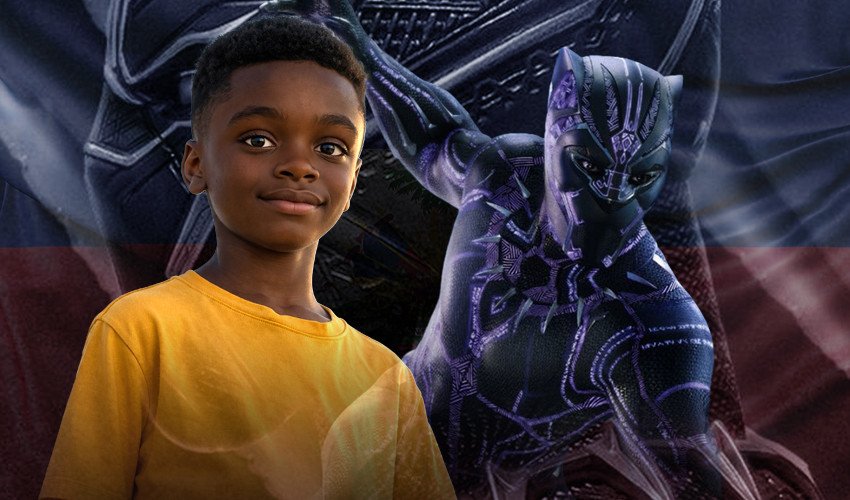
In a move that is both symbolic and cultural, Marvel Studios has subtly strengthened Haiti’s presence in its cinematic universe through the film Black Panther: Wakanda Forever. Under the direction of Ryan Coogler, this narrative choice marks a significant step in the representation of Haitian history and identity on screen.
In the film’s post-credits scene, audiences are introduced to the son of King T’Challa, known as T’Challa II. Beyond his Wakandan identity, the child carries a name rich in history: Toussaint, a direct reference to Toussaint Louverture, a key figure of the Haitian Revolution.
This detail is far from trivial. The young boy lives in Cap-Haïtien, Haiti, with his mother Nakia, away from the Wakandan throne. According to the film, this decision is meant to shield him from the burdens of royal responsibility. The scene in which Shuri travels to Haiti to meet him reinforces this unexpected connection between the fictional African kingdom and the world’s first independent Black republic.
Beyond fiction, this decision is rooted in deliberate historical reflection by the director. In an interview on Sway’s Universe, Ryan Coogler highlighted the symbolic importance of Haiti’s history, describing it as “the first community of enslaved Africans to win a war against oppression,” while also acknowledging the deep injustices that followed—some of which influenced major events like the Louisiana Purchase.
Coogler explained that this choice fit naturally within the film’s narrative logic. In his view, it made sense for Nakia to seek refuge in Haiti within this fictional universe, and equally meaningful for her to give her son—a future leader—a Haitian name. This decision strengthens the symbolic weight of the character and his legacy.
By integrating Haiti into the Marvel Cinematic Universe, Marvel is not merely expanding its geographic scope. It is building a powerful cultural and historical bridge, linking Wakanda’s legacy with that of the Haitian Revolution. The name Toussaint thus becomes a symbol—connecting the struggle for freedom and African heritage to a new generation of heroes.
For many members of the Haitian diaspora, this representation stands as a rare but meaningful recognition of Haiti’s historical influence within a globally popular franchise—reminding audiences that real histories can be just as powerful as fictional ones.