


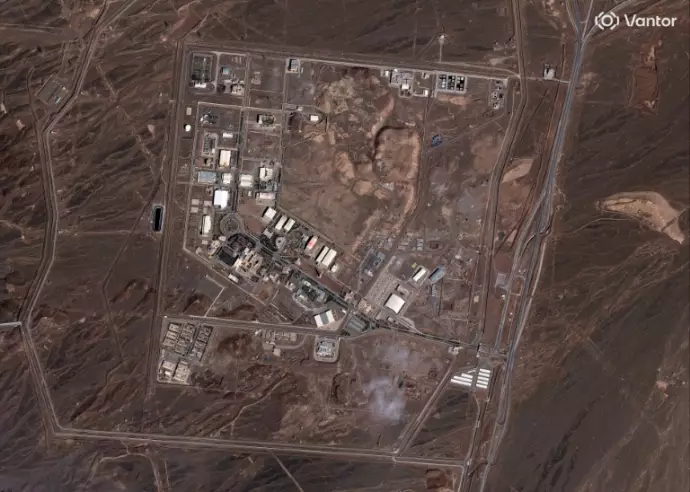
On Saturday, the U.S. military confirmed the destruction of a massive Iranian underground installation in the Strait of Hormuz. The operation, which took place earlier this week, aims to weaken Tehran’s blockade of the world’s most vital oil transit route. Iran initiated the blockade in response to joint U.S.-Israeli strikes launched on February 28, a move that has sent global crude prices soaring.
While the strike was initially announced on Tuesday, Saturday’s update from Admiral Brad Cooper, head of U.S. Central Command (CENTCOM), provided the first concrete details. Cooper stated that the mission successfully wiped out a site housing cruise missiles, intelligence centers, and radar relays used to track maritime traffic.
“Iran’s ability to threaten freedom of navigation in and around the Strait of Hormuz has been significantly diminished,” Admiral Cooper stated. “We will not stop pursuing these targets.”
A coalition of twenty nations—including the UK, France, Japan, and the UAE—has expressed readiness to support efforts to reopen the Strait, condemning Iranian attacks on energy infrastructure.
Nuclear Site Targeted Amid Rising Tensions
Despite three weeks of sustained combat, the intensity of the war shows no signs of waning. On Saturday morning, the Atomic Energy Organization of Iran (AEOI) accused U.S. and Israeli forces of striking the Natanz nuclear facility. While Iran claims there have been no radioactive leaks, the Israeli military said it was “not aware” of such a strike, though local media reports suggest it may have been a unilateral American action.
IAEA Director Rafael Grossi has called for “military restraint” to avoid a nuclear catastrophe. Meanwhile, the Kremlin—a long-standing ally of Tehran—blasted the strikes as “irresponsible,” warning of a disaster that could engulf the entire Middle East. Eliminating the Iranian nuclear threat has been a primary stated objective for President Donald Trump since the start of the offensive.
“We Will Not Stop”: Conflict Escalates
Hopes for an immediate end to hostilities were dashed on Saturday when Israeli Defense Minister Yoav Gallant (referred to in the text as Israel Katz) warned that the intensity of strikes would “increase significantly” in the coming days. Over the weekend, Israeli jets bombed missile production sites in Tehran.
While President Trump suggested on Friday that the U.S. is “close to achieving” its goals and may eventually scale back its military presence, he explicitly ruled out a ceasefire.
Analyst Perspectives:
Sustainability: Dr. Neil Quilliam of Chatham House suggests Iran may have more endurance than previously thought, predicting they could hold out for another four to six weeks.
Reach: On Friday, Tehran reportedly attempted a long-range strike on the U.S.-UK base at Diego Garcia (4,000 km away). Though the attack failed, it raised eyebrows as Iran’s missiles officially have a maximum range of only 2,000 km.
Regional Spillover: Iraq and Bahrain Hit
The war has rapidly evolved into a regional conflict. Several high-ranking Iranian officials, including Supreme Leader Ali Khamenei, were reportedly killed in the opening days of the war. His son and successor, Mojtaba Khamenei, has yet to make a public appearance and was notably absent from Eid al-Fitr prayers in Tehran this Saturday.
The violence is also spreading to neighboring Gulf states:
Iraq: A drone strike on intelligence headquarters in central Baghdad killed a high-ranking officer on Saturday.
Bahrain: Multiple explosions were reported in the capital, Manama.
Lebanon: Heavy fighting continues in the south between Hezbollah and Israeli forces, particularly in the towns of Khiam and Naqoura, following Israeli strikes on Beirut.
Iran has issued a stern warning to the UAE, threatening “violent strikes” against any Gulf islands if they continue to allow U.S. forces to use their territory for offensive operations