
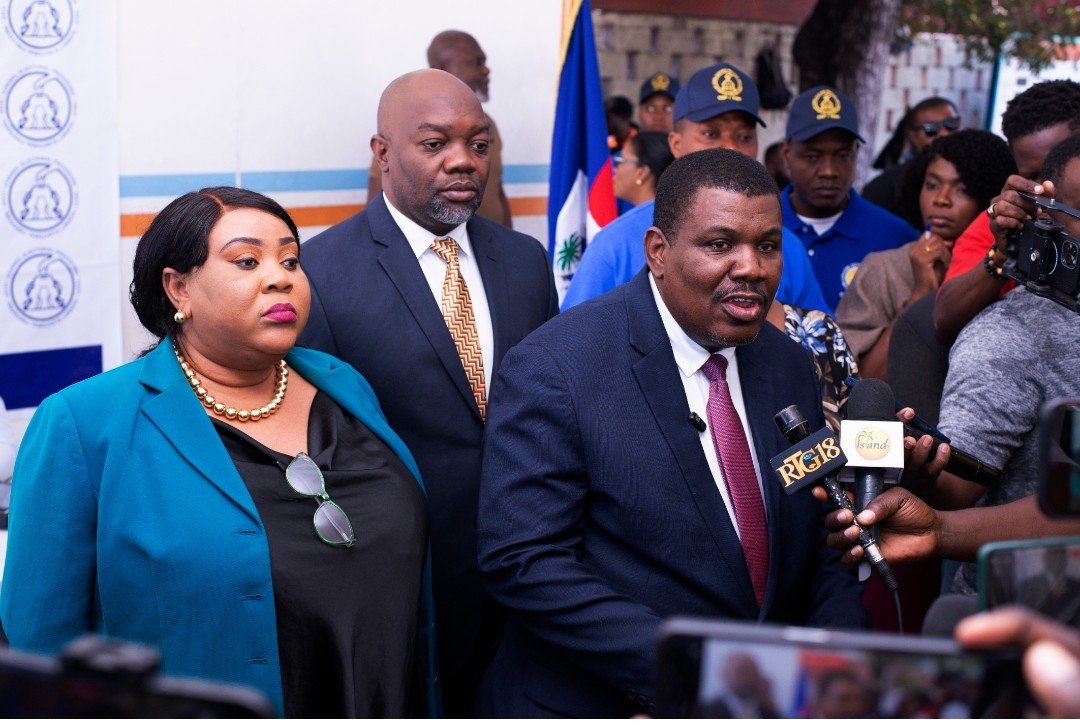
Following the Prime Minister’s categorical refusal to validate a $250 million budget for organizing the elections, the Provisional Electoral Council (CEP) announced in a statement that it sent a revised budget proposal to the government this week. While the official statement did not mention specific figures, sources within the electoral institution told Le Nouvelliste that the new budget now stands at just over $220 million.
According to three electoral advisers reached by phone, the cost of the upcoming elections is unlikely to fall below $220 million, with estimates ranging between $225 million and $230 million. One adviser pointed out that the government may not fully grasp the complexities involved, noting that ten years after the last elections, the CEP has inherited significant arrears for rented premises and that regional offices (BED and BEC) are currently empty and must be completely rebuilt.
The CEP highlighted several factors for the high cost compared to 2015 and 2016, such as the lack of logistical support from MINUSTAH or USAID. Additionally, new features like voter registration, departmental tabulation centers, and diaspora voting represent significant additional costs. The revised document, prepared with assistance from UN agencies (UNOPS, UNDP, and BINUH), outlines two technical scenarios for the elections. It remains to be seen how Prime Minister Alix Didier Fils-Aimé—who previously called the $250 million figure “absurd”—will react to this new proposal, which is only $25 million less than the original.