
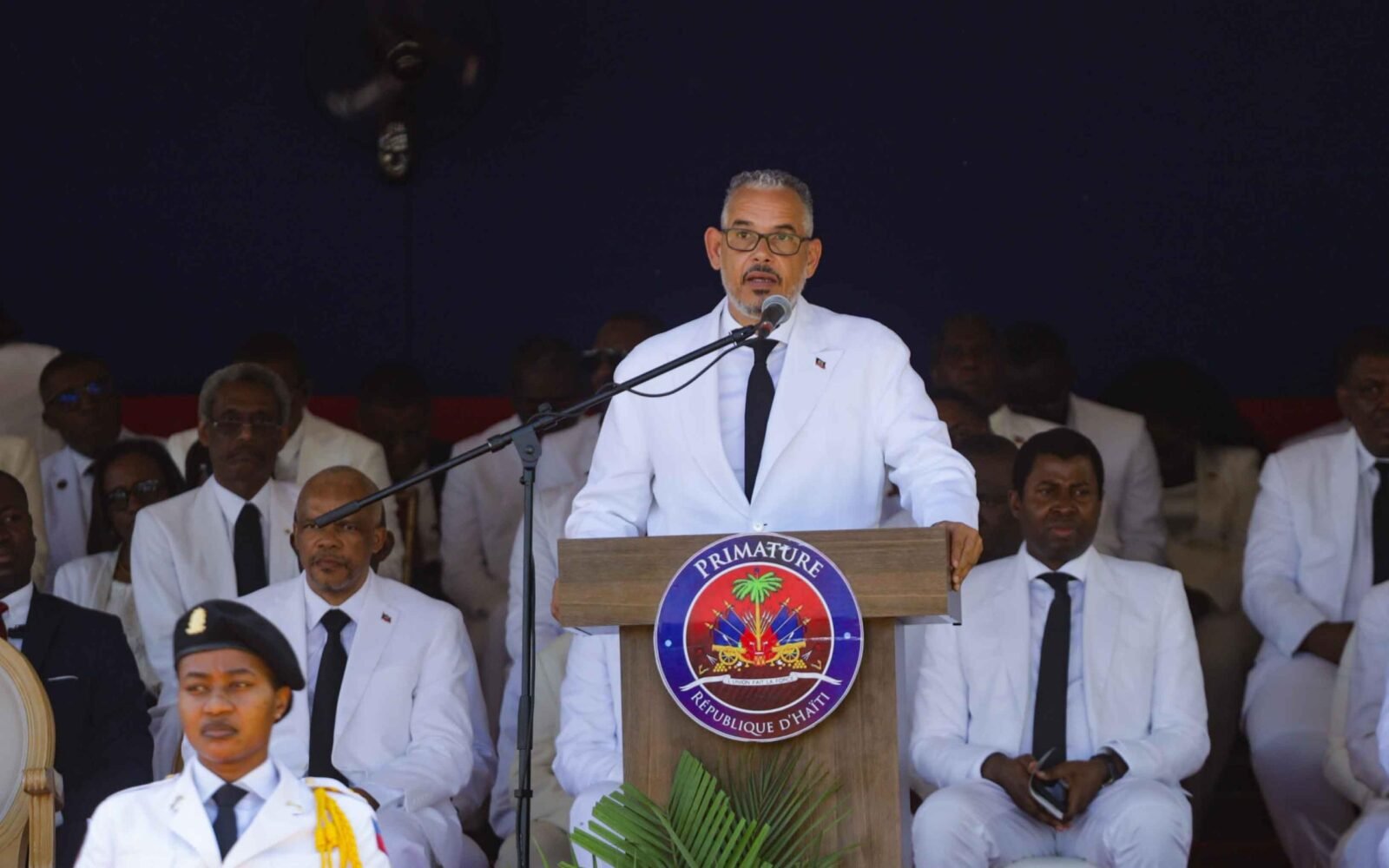
A highly critical political op-ed raises immediate alarms over the performance and underlying motivations of Prime Minister-President Alix Didier Fils-Aimé as he marks his first one hundred days in office with full executive powers. The text underscores that alongside the National Police (PNH), the Armed Forces (FAd’H), and the allied security coalition (FRG), the government bears a fundamental, non-negotiable duty to restore security, halt territorial massacres, and stop mass population displacements. However, the analysis highlights a widening gulf between official rhetoric and reality, noting that due to extensive logistical delays and widespread violence, it is now impossible to wrap up the national electoral process in 2026.
The core of the criticism focuses on a severe breach of political trust, even among the signatories of the national Pact for Stability and Elections. Political organizations openly accuse Fils-Aimé of attempting to compromise the independence of the Provisional Electoral Council (CEP). These concerns surged following the weekend leak of an unofficial draft for a new electoral decree, reportedly crafted by actors tied to the executive branch. The article brands the leaked text as “scandalous” and a direct negation of Haiti’s post-1986 democratic progress, arguing that its clear intent is to place the CEP under direct government control, a move that severely risks his credibility and international backing.
Furthermore, the editorial reviews a series of controversial measures quietly enacted by the current administration during its near two years in power. It points out Fils-Aimé’s refusal to repeal decrees on the High Court of Justice and defamation, the quiet publication of a new law governing mining rights in Haiti, the alteration of public procurement thresholds, and the financial non-compliance flags raised by the Court of Auditors (CSCCA) regarding missing general accounts for the 2024-2025 budget. The critique concludes with a metaphorical warning to the Prime Minister-President: if he chooses to protect entrenched local or foreign interests and maintain a destructive statu quo, he will leave office through the back door of history, urging him to urgently steer clear of the “shadows” cast by his failed predecessors.