
After several months away from the media spotlight, former Delmas lawmaker Gary Bodeau has returned to Haiti’s political conversation.
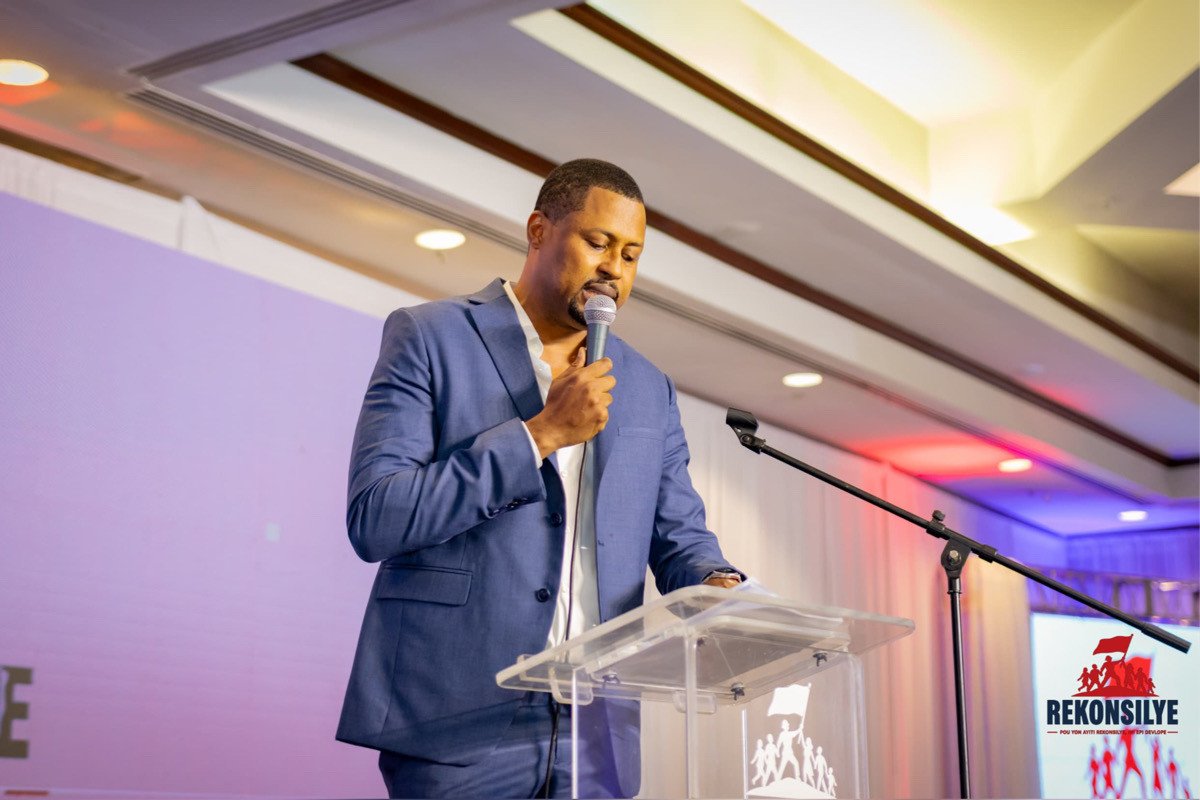
Speaking to reporters on Thursday, August 27, 2026, during the official launch of the political platform REKONSILYE, Bodeau addressed a range of issues, including the upcoming elections, the leadership of Prime Minister Alix Didier Fils-Aimé, Haiti’s security crisis and the role of young people in politics.
On the electoral process, Bodeau said the next elections should not be organized to benefit any particular political sector. He described the international community as a partner, while stressing that Haitian political actors must keep the national interest at the center of their decisions.
He also argued that any future political transition should not be tied to a specific political organization. Still, the former lawmaker welcomed efforts to move the country toward elections, describing the process as an important “attempt” in a country that has been facing a deep institutional and security crisis for several years.
Asked about the government of Prime Minister Alix Didier Fils-Aimé, Bodeau made clear that he does not consider the prime minister a political opponent.
He said, however, that the government’s decisions and performance should remain open to criticism and recommendations. In his view, political and social actors have a responsibility to speak up when they believe certain decisions are taking the country in the wrong direction.
Bodeau urged the prime minister to be more receptive to advice and criticism from those seeking to influence the direction of the country.
The former president of the Chamber of Deputies also said he is not currently facing political persecution, contrasting his present situation with what he said he experienced under the government of former Prime Minister Ariel Henry.
Bodeau also used his appearance to address young Haitians who are considering entering politics.
Drawing on his own experience, he said that some of his political positions and initiatives — including efforts he said were aimed at bringing greater order to public administration and challenging practices he considered fraudulent — had drawn criticism and resentment.
He warned young people against idealizing political life, saying that anyone seeking influence in public affairs must be prepared to deal with the consequences of their choices.
“You should not think that because you are involved in politics, you will never be attacked,” he said in substance, stressing that political engagement can expose public figures to significant pressure.
Despite those risks, Bodeau encouraged the younger generation to use its influence in the service of the population while maintaining a sense of balance and restraint.
Turning to Haiti’s broader crisis, he painted a troubling picture of the country’s current situation. He pointed to the loss of life recorded in recent years and the worsening conditions in several working-class neighborhoods that have been heavily affected by insecurity.
Against that backdrop, Bodeau presented REKONSILYE as a political structure that could help contribute to the country’s reconstruction, promote unity and solidarity, and take part in the search for solutions to the ongoing crisis.
The most notable announcement, however, concerned his own electoral future.
Bodeau said he will not seek another term as deputy for Delmas in the upcoming elections, explaining that he wants to make room for a new generation.
That does not mean he is leaving electoral politics altogether.
The former lawmaker said he could seek a different elected office in the future, although he has not yet revealed which position he may pursue.
After a period of relative silence, Gary Bodeau appears ready to re-enter Haiti’s public political debate, while leaving open the question of what his next political move will be.