
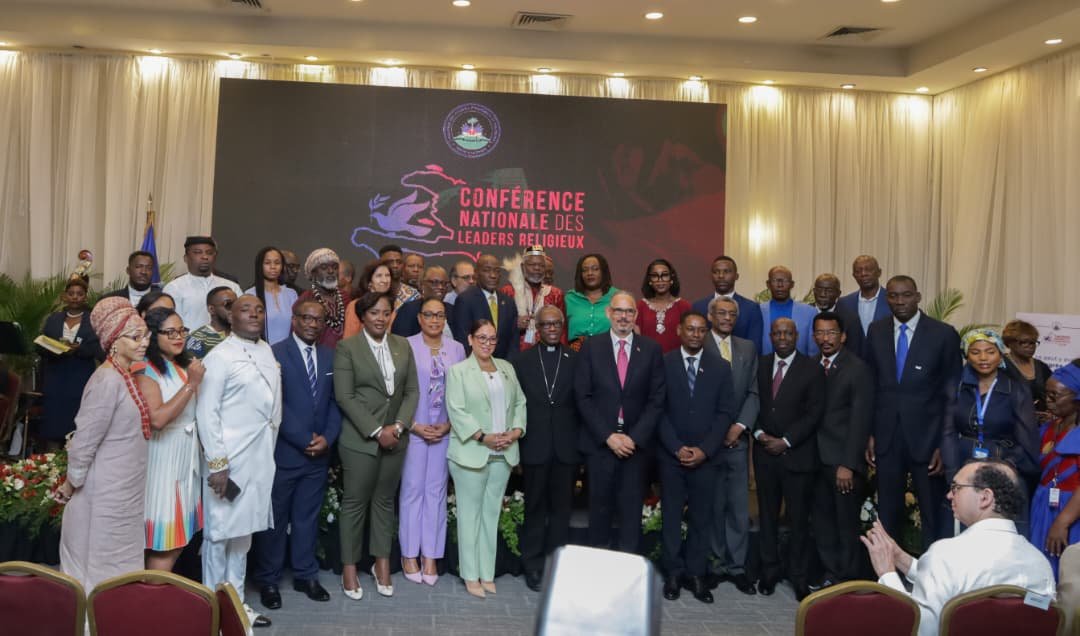
Amid an ongoing security crisis, the Haitian government and top religious leaders convened at the Royal Oasis Hotel on May 28 and 29, 2026, for the National Conference of Religious Leaders for Peace, Stability, and Civics. Spearheaded by the Ministry of Foreign Affairs and Worship under the patronage of Prime Minister Alix Didier Fils-Aimé, the two-day summit marks a highly unusual ecumenical gathering, drawing prominent figures including Vodou leader Erol Josué, Prophet Mackenson representing the Protestant sector, and Father Brillère Aupont, pastor of the Christ-Roi Catholic parish.
In his opening address, Prime Minister Fils-Aimé delivered a candid assessment of the national landscape, emphasizing that the current turmoil has broken down basic societal structures. “It is no secret to anyone; our country is going through a painful, deep period,” the head of government stated, urging faith leaders to look past theological differences to help restore institutional stability. Speaking in Creole, the Prime Minister highlighted the internal component of the crisis: “The crisis we are going through is not just a security, economic, or social crisis; it is a deep crisis that affects trust between citizens, weakens fraternal bonds, and threatens national security.” Foreign Minister Raina Forbin echoed these sentiments, asserting that no sustainable peace project can succeed without integrating the country’s moral and human leadership.
According to the framework document distributed at the conference, the administration intends to establish a permanent “National Framework for Interreligious Dialogue,” aimed primarily at the socio-economic reintegration of youth affected by gang violence. Four technical workshops were launched to address violence prevention, victim support, economic alternatives, and civic education. While the Prime Minister used the platform to highlight recent anti-gang police measures and judicial units targeting financial crimes, local observers noted the stark contradiction between the conference’s rhetoric and the reality on the ground, where heavy fighting and kidnappings continue to plague the Artibonite and Centre departments, meaning high-level appeals must be backed by swift, visible security results to regain public confidence.