
Perched in the heights of Pétion-Ville, Fort Jacques can be visited with little restriction. This was observed during a visit on Tuesday, April 14, 2026. At the entrance, no strict control measures are visible. A simple chain serves as a barrier. After crossing it, a paved path lined with trees leads freely into the site. It was only necessary to signal our presence to a guard positioned at a distance. He nodded, indicating that entry posed no issue.
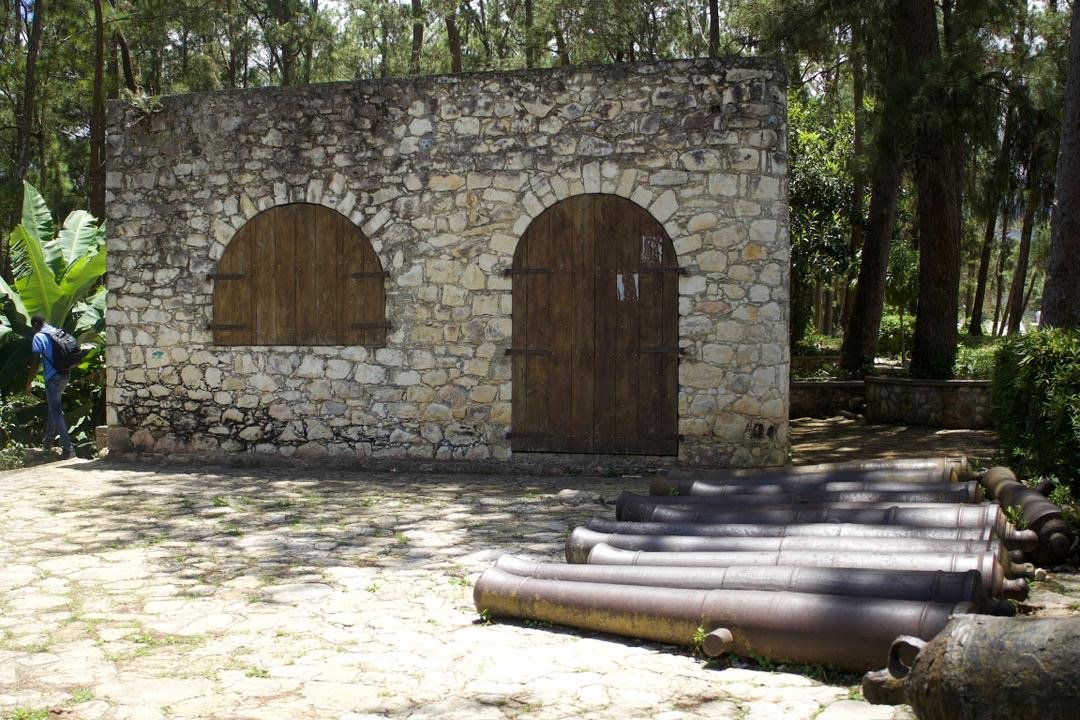
Once inside, the remains of the fort can be explored without any particular supervision. The stone buildings, equipped with wooden doors, are not accessible during this visit due to restoration work carried out for several weeks by ISPAN. A few meters away, dozens of cannons lie scattered on the ground.
Upon arrival, no visitors were seen, except for two other journalists filming videos for a report. Later interviewed by Le Nouvelliste, the guard Renold Morneus explained that the site experiences varying levels of attendance. “On weekends, there are many more visitors,” he said, noting that during the week “a few couples come to enjoy the setting, sometimes for intimate purposes,” away from prying eyes. According to him, public holidays such as May 1, May 18, and November 18 attract large crowds, especially school groups. “Students come for picnics,” he added, noting that schools must first obtain written authorization from the National Heritage Preservation Institute (ISPAN) to use the site.
Despite these periods of high attendance, no visible system—such as cameras, systematic checks, or reinforced security presence—exists to effectively regulate entries and exits. The site, surrounded by dense vegetation, offers a peaceful setting, but this configuration may also allow discreet access. According to the guard, the site has two security agents and a fixed police point, although none were present on the day of our visit.