
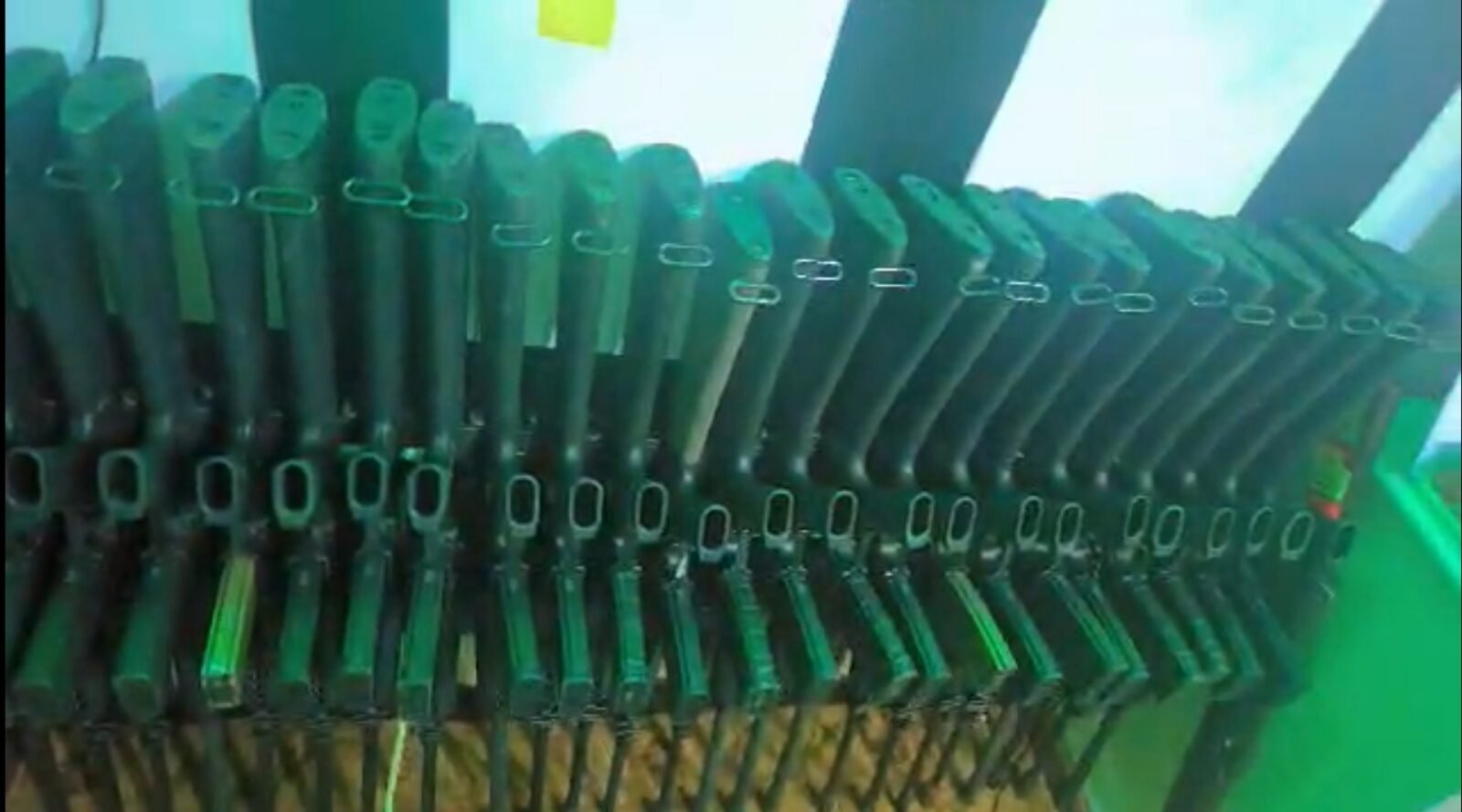
Amid violent clashes between rival gangs in the Plaine du Cul-de-Sac region north of Port-au-Prince, a 76-second video circulating on social media in mid-May 2026 has caused high-level embarrassment in Haiti, the Dominican Republic, and the United States. In the footage, notorious gang leader Wilson Joseph, alias Lanmò San Jou—who is wanted by the FBI—nonchalantly displays around thirty American-made M4 assault rifles stored in a bedroom. This marks a rare occasion where a Haitian gang leader has showcased such a large batch of identical tactical weaponry, enough to fully equip an elite SWAT unit.
The viral video has sparked severe concerns among regional officials, who suspect these M4 rifles may have originated from official state arsenals in the neighboring Dominican Republic. This scenario aligns with a 2025 UN Security Council report, which revealed that corrupt Dominican security agents regularly leak ammunition and weapons to Haitian gangs. As clear evidence, the UN highlighted a 2024 seizure in Mirebalais involving 5,000 rounds of 5.56 mm ammunition manufactured by Italy’s Fiocchi, which the company confirmed was part of a 2022 bulk delivery destined exclusively for the Dominican National Police. This international scrutiny forced Dominican authorities to launch “Operation Pandora” in late 2024, resulting in the arrest of several high-ranking officers, including the colonel heading the police weapons department, after an audit exposed the theft of over 900,000 rounds of ammunition.
This illicit pipeline thrives on the notorious porosity of the border, which features over 110 illegal crossing points and lake routes heavily controlled by armed civilian groups. Backed by vast funds generated from extorting commercial trucks, Lanmò San Jou faces no financial barriers to equipping his forces. Conversely, Haiti’s state response remains paralyzed: a crucial border infrastructure contract with the Evergreen and ENSE Group consortium has stalled because the government failed to provide a bank guarantee for a $13 million start-up advance, leaving border units like Polifront and the Haitian Armed Forces (FAd’H) heavily outgunned and understaffed.
The humanitarian toll of this unchecked gang warfare is devastating, with the UN reporting at least 390 deaths in Cité Soleil and Croix-des-Bouquets between March and mid-May 2026, alongside 10,000 newly displaced people in a matter of days. In response, Prime Minister Alix Didier Fils-Aimé has established mandatory weekly strategy meetings with the Police, the Military High Command, and the Gang Suppression Force (FRG) to intensify counter-offensive measures, alongside the involvement of a private military company. However, defense experts emphasize that unless authorities successfully sever the logistics chain and ammunition flow feeding these criminal organizations, tactical operations will achieve little long-term success.